Introduction
Very few cleaning products become famous.
Most sponges look the same, work the same, and are forgotten as soon as people buy them.
Scrub Daddy changed that.
What started as a simple cleaning sponge became one of the most successful household products in modern retail history. Millions of people around the world recognize its smiling face. It became a bestseller on television, online stores, supermarkets, and home shopping channels.
Scrub Daddy is famous because it turned an ordinary product into something people wanted to talk about, recommend, and even collect.
This product is important because it shows that innovation does not always require advanced technology. Sometimes a small improvement in a common product can create a huge business opportunity.
Entrepreneurs can learn valuable lessons from Scrub Daddy about product design, customer psychology, branding, positioning, and marketing.
This case study explores how a simple sponge changed an entire category and became an iconic consumer brand.
Quick Product Overview
| Category |
Details |
| Product Name |
Scrub Daddy |
| Founder |
Aaron Krause |
| Launch Year |
2012 (commercial launch) |
| Country |
United States |
| Industry |
Household Cleaning Products |
| Product Category |
Cleaning Sponge |
| Target Customers |
Homeowners, families, cleaning enthusiasts, businesses |
| Current Market Position |
One of the world's most recognized cleaning sponge brands |
Topics We Will Discuss
The Industry Before This Product
Before Scrub Daddy entered the market, cleaning sponges were viewed as simple commodities.
Most consumers purchased whatever sponge was available at the local store.
There was little excitement in the category.
Existing Solutions
Customers mainly used:
Most products looked very similar.
Common Frustrations
Consumers regularly faced problems:
People accepted these problems because they believed all sponges were basically the same.
Industry Assumptions
Manufacturers believed customers cared mainly about:
Most companies focused on producing inexpensive products rather than creating meaningful innovation.
Competitor Behavior
Competitors competed mostly on:
-
Cost
-
Shelf placement
-
Packaging
-
Promotions
Very few brands focused on improving the actual cleaning experience.
This created an opportunity waiting to be discovered.
The Problem Nobody Was Solving
The biggest opportunity was hidden inside everyday cleaning frustration.
Hidden Customer Pain Points
Customers wanted:
No product solved all these needs at the same time.
Consumer Frustration
People often switched between multiple cleaning tools.
One sponge might work for dishes but scratch delicate surfaces.
Another might be gentle but ineffective.
This created inconvenience.
Market Gap
Consumers wanted flexibility.
They wanted a cleaning tool that could adapt to different tasks.
Nobody was seriously addressing this need.
Why Existing Products Failed
Traditional sponges had fixed textures.
They could not change based on the cleaning task.
As a result, customers constantly compromised between softness and scrubbing power.
Scrub Daddy solved this problem with a simple but powerful idea.
The Origin Story
Founder Background
Aaron Krause was an entrepreneur and inventor.
He spent years developing products and solving practical problems.
His experience gave him a deep understanding of manufacturing and consumer needs.
How the Idea Started
Krause originally developed a special foam material for industrial use.
The material was designed for cleaning surfaces without scratching them.
Years later, he rediscovered the material and realized it could have a consumer application.
Inspiration
The key insight came from noticing how the material changed texture depending on water temperature.
Cold water made it firm.
Warm water made it soft.
This was unusual and useful.
Early Challenges
Many challenges appeared:
-
Product design
-
Manufacturing
-
Retail acceptance
-
Customer awareness
Like many inventions, the product did not immediately become a success.
Turning Point
The biggest turning point came when Aaron Krause appeared on Shark Tank in 2012.
Investor Barbara Corcoran saw the product's potential and invested.
The exposure changed everything.
Millions of people suddenly discovered Scrub Daddy.
What Makes This Product Different?
Product Design
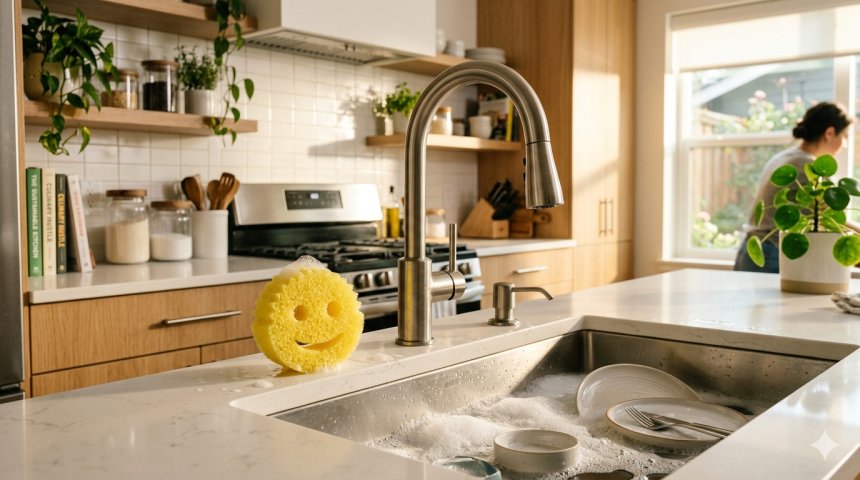
The most obvious feature is the smiling face.
The smile is not only decorative.
It serves practical purposes.
The mouth helps clean utensils.
The eyes provide finger grips.
This combination of function and personality is rare.
Product Features
Key features include:
Customer Experience
Customers immediately notice:
The experience feels unique.
Packaging
Packaging clearly communicates benefits.
Customers quickly understand what makes the sponge different.
Ease of Use
The product requires no learning curve.
Consumers instantly understand how to use it.
Emotional Appeal
The smiling face creates positive emotions.
People often describe the product as fun.
Very few cleaning products create emotional connections.
Innovation
The innovation is simple but meaningful.
It improves daily life without requiring customers to change behavior.
The Unique Value Proposition
The core promise is simple:
One sponge that adapts to different cleaning jobs.
Customers receive:
Competitors struggled because copying the material alone was not enough.
The success came from the complete system:
-
Product design
-
Brand identity
-
Customer experience
-
Marketing
Together these elements created a powerful advantage.
Consumer Psychology Behind Success
Emotional Triggers
The smiling face creates positive feelings.
People naturally respond to friendly faces.
This makes the product memorable.
Trust Signals
Demonstrations clearly show how the sponge works.
Customers can see the benefits.
Visible proof builds trust.
Simplicity
The message is easy to understand.
Cold water = firm.
Warm water = soft.
Simple ideas spread faster.
Status
Some customers enjoy discovering useful products before others.
Owning innovative products creates a feeling of being smart and informed.
Convenience
One tool replaces multiple cleaning tools.
Convenience drives purchasing decisions.
Identity
Many customers see themselves as organized and efficient.
The product supports this self-image.
Social Proof
Millions of customers purchased the sponge.
Positive reviews encouraged new buyers.
Habit Formation
Cleaning is a repeated activity.
Once customers experience better results, repeat purchases become common.
Fear of Missing Out
Television demonstrations and viral videos made people curious.
Many wanted to try the product themselves.
Community Effects
Satisfied customers frequently recommend Scrub Daddy to friends and family.
Word-of-mouth became a powerful growth engine.
Branding Strategy
Brand Name
The name "Scrub Daddy" is memorable.
It sounds friendly and approachable.
Logo
The smiling face is instantly recognizable.
It works across packaging, advertising, and digital media.
Visual Identity
Bright colors help the product stand out on crowded shelves.
Packaging Design
Packaging focuses on benefits and visibility.
Customers can easily see the product.
Brand Personality
The brand feels:
-
Friendly
-
Fun
-
Helpful
-
Positive
Brand Voice
Marketing messages are simple and energetic.
Customer Perception
Consumers see Scrub Daddy as:
-
Innovative
-
Effective
-
Trustworthy
-
Fun
This perception helps justify premium pricing.
Marketing Strategy
Launch Strategy
The Shark Tank appearance provided national exposure.
This dramatically accelerated awareness.
Advertising
Demonstration-based advertising became the foundation of marketing.
Showing works better than telling.
Social Media
Videos showing cleaning results performed extremely well online.
Visual demonstrations encouraged sharing.
Viral Marketing
Many customers posted before-and-after cleaning results.
These posts generated organic attention.
Influencer Marketing
Home organization and cleaning influencers helped expand reach.
Word of Mouth
Satisfied customers became brand advocates.
This remains one of the company's strongest marketing channels.
PR Strategy
The Shark Tank success story generated extensive media coverage.
Content Marketing
Educational cleaning content helped maintain customer engagement.
Partnerships
Retail partnerships expanded visibility and availability.
Positioning Strategy
Category Position
Scrub Daddy entered the cleaning sponge category.
Category Redefinition
Rather than competing as another sponge, it positioned itself as a smarter cleaning tool.
Differentiation
Competitors sold sponges.
Scrub Daddy sold innovation.
Customer Perception
Consumers viewed Scrub Daddy as a premium solution rather than a basic commodity.
This distinction was extremely important.
Pricing Strategy
Initial Pricing
The product was priced above generic alternatives.
Premium Positioning
The company intentionally avoided competing on price.
Value Perception
Customers believed they received:
-
Better performance
-
Better durability
-
Better experience
Price Acceptance
The additional value justified the higher price.
Customers focused on benefits rather than cost.
Customer Base Analysis
Primary Audience
Homeowners and families.
Secondary Audience
-
Cleaning enthusiasts
-
Professional cleaners
-
Small businesses
Demographics
Broad demographic appeal.
Useful across age groups and income levels.
Psychographics
Customers often value:
-
Efficiency
-
Cleanliness
-
Convenience
-
Practical innovation
Buying Motivations
Key motivations include:
-
Better cleaning results
-
Curiosity
-
Product recommendations
-
Time savings
Distribution Strategy
Online Sales
E-commerce allowed nationwide reach.
Retail Partnerships
Placement in major retail stores increased visibility.
Direct-to-Consumer
Direct sales improved customer relationships and data collection.
Expansion Strategy
The company expanded internationally and introduced related products.
Distribution growth made the brand accessible everywhere consumers shop.
Key Growth Moments
2008–2011: Product Development
The concept evolved and improved.
Impact
Created a strong foundation.
2012: Shark Tank Appearance
Aaron Krause presented Scrub Daddy.
Impact
Massive national awareness.
2013: Retail Expansion
Major retailers adopted the product.
Impact
Significant sales growth.
2014–2018: Product Line Expansion
New variations entered the market.
Impact
Increased customer lifetime value.
2019–Present: Global Growth
Brand recognition expanded internationally.
Impact
Strengthened market leadership.
Biggest Challenges
Competition
Many competitors introduced similar products.
Response
Continued innovation and branding.
Customer Skepticism
People questioned whether a sponge could be special.
Response
Demonstration-based marketing.
Operational Challenges
Growing demand required scaling production.
Response
Investment in manufacturing capabilities.
Market Barriers
Retail shelf space is highly competitive.
Response
Strong sales performance justified placement.
Internal Challenges
Managing rapid growth can strain operations.
Response
Professional management and expansion planning.
How This Product Changed Consumer Behavior
Before
People viewed sponges as interchangeable.
After
Consumers became willing to evaluate sponge performance and innovation.
New Habits
Customers began:
-
Researching cleaning tools
-
Watching product demonstrations
-
Choosing premium cleaning products
New Expectations
Consumers now expect:
-
Better durability
-
Better design
-
Better functionality
Industry Changes
Innovation became more important across the cleaning category.
Impact on the Industry
Competitor Reactions
Many companies launched imitation products.
Copycat Products
Smile-shaped and texture-focused alternatives appeared.
New Trends
Greater emphasis on:
-
User experience
-
Product design
-
Visual branding
Long-Term Influence
Scrub Daddy proved even simple household products can become premium brands.
Business Lessons Entrepreneurs Can Learn
Lesson 1: Innovate in Boring Markets
Great opportunities often exist in overlooked categories.
Takeaway
Never ignore ordinary products.
Lesson 2: Solve Real Problems
Customers pay for meaningful improvements.
Takeaway
Focus on pain points.
Lesson 3: Make Benefits Visible
Visible demonstrations increase trust.
Takeaway
Show results.
Lesson 4: Design Matters
Good design creates differentiation.
Takeaway
Function and appearance should work together.
Lesson 5: Simplicity Wins
Simple ideas spread faster.
Takeaway
Keep messaging clear.
Lesson 6: Branding Creates Value
Strong brands escape commodity pricing.
Takeaway
Invest in brand building.
Lesson 7: Personality Helps
People remember products with character.
Takeaway
Create emotional connections.
Lesson 8: Distribution Is Critical
A great product must be accessible.
Takeaway
Build strong retail relationships.
Lesson 9: Word of Mouth Is Powerful
Happy customers become marketers.
Takeaway
Create experiences worth sharing.
Lesson 10: One Breakthrough Can Change Everything
A single major opportunity can transform growth.
Takeaway
Be prepared when opportunities appear.
Mistakes Competitors Made
Wrong Assumptions
Competitors believed customers only cared about price.
Missed Opportunities
Many ignored product innovation.
Strategic Errors
They treated cleaning products as commodities for too long.
This allowed Scrub Daddy to establish a unique position.
Could This Product Succeed If Launched Today?
Modern Competition
Competition is stronger today.
Many innovative cleaning products exist.
Market Conditions
Consumers are more willing to try new household products.
Consumer Trends
People increasingly value:
Opportunities
Strong opportunities remain for products that solve everyday problems.
Risks
Higher advertising costs and crowded markets create challenges.
Overall Assessment
Yes.
A product like Scrub Daddy could still succeed today if it offered a meaningful innovation and strong branding.
SWOT Analysis
| Strengths |
Weaknesses |
| Strong brand recognition |
Dependence on core product category |
| Unique design |
Premium pricing compared to generic options |
| Proven performance |
Easy concept for competitors to imitate |
| Loyal customer base |
Category growth limitations |
| Opportunities |
Threats |
| International expansion |
Low-cost competitors |
| New product categories |
Retail competition |
| Sustainability innovations |
Changing consumer preferences |
| Digital commerce growth |
Economic downturns |
Key Takeaways
-
Scrub Daddy transformed a commodity product into a premium brand.
-
Product innovation solved real customer frustrations.
-
The smiling design created emotional engagement.
-
Shark Tank accelerated awareness and credibility.
-
Demonstration-based marketing increased trust.
-
Strong branding supported premium pricing.
-
Distribution partnerships expanded reach.
-
Word-of-mouth fueled growth.
-
Consumer psychology played a major role.
-
Small innovations can create massive businesses.
Conclusion
Scrub Daddy became successful because it solved a common problem in a simple and memorable way.
The company did not invent cleaning.
It reinvented how people think about a cleaning sponge.
Its temperature-responsive material, smiling design, clear value proposition, and strong branding created a product that stood out in a crowded market.
The brand proved that innovation does not need to be complex. A small improvement that makes everyday life easier can create enormous value.
Scrub Daddy also demonstrated the power of consumer psychology. People remember products that are useful, easy to understand, visually distinctive, and emotionally positive.
Perhaps the most important lesson is that great business opportunities often hide inside ordinary products. While many companies competed on price, Scrub Daddy competed on experience.
That decision transformed a simple sponge into one of the most successful household product brands of the modern era and created a business case study that entrepreneurs will continue to study for years to come.


 Like
0
Like
0
 Dislike
0
Dislike
0
 Love
0
Love
0
 Funny
0
Funny
0
 Angry
0
Angry
0
 Sad
0
Sad
0
 Wow
0
Wow
0